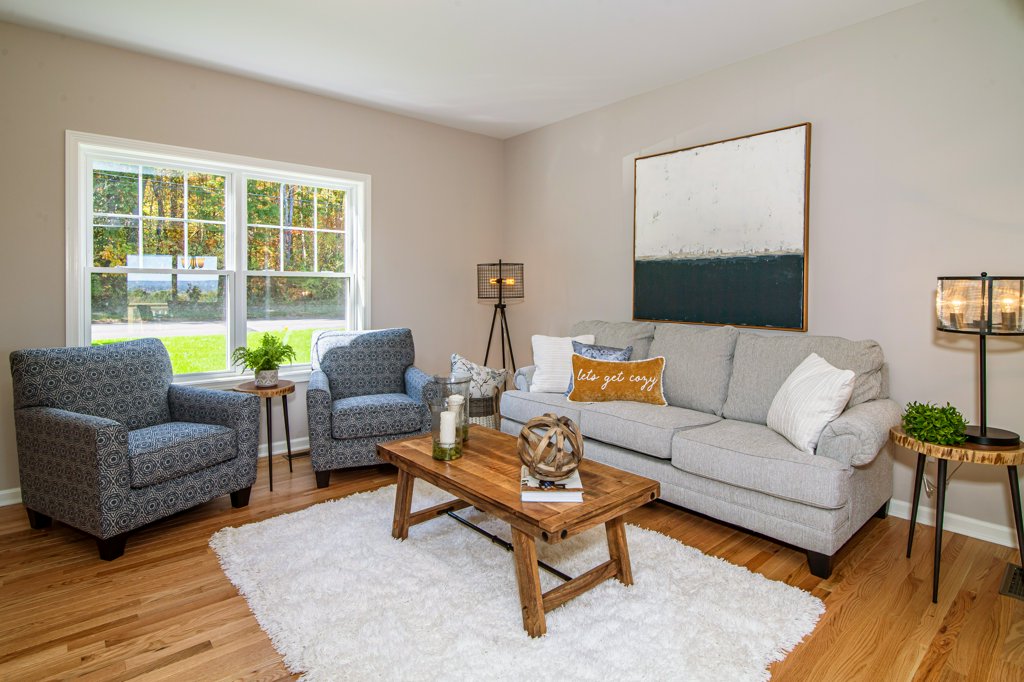
We're continuing our Best Floor Plan Series with a deep look at the best floor plans for aging in place. Over the past several years, more and more homeowners have decided they want to stay in their own homes as long as possible rather than move to a retirement community. It's not surprising. According to AARP's 2024 Home and Community Preferences Survey, 75% of adults aged 50 and older want to remain in their current home as they age, and seniors today tend to be far more active than they were a generation ago.
But if you're thinking about building a new home that lets you age in place comfortably, there's more to it than adding a few grab bars later. The best results come from planning, and that planning begins with the right floor plan.
In this guide, we will look at what a floor plan needs to include to keep you comfortable and safe in your home as you get older.
Use the links below to navigate to the sections you want to read:
What Does "Aging in Place" Actually Mean?
Aging in place means living safely and independently in your own home as you grow older, without having to relocate as your needs change. When you build those principles into a home from day one, you create what many in our industry call a forever home.
The good news is that designing for aging in place doesn't mean designing a home that looks clinical or "senior." Done right, these homes are open and broadly appealing, which also makes them easier to resell down the road.
Aging in Place vs. Universal Design: What's the Difference?
People often use these terms interchangeably, but there's a meaningful distinction worth understanding before you start planning.
Aging in place focuses on the specific, evolving needs of a particular homeowner. It often involves modifications added as physical abilities change over time, like grab bars or a stair lift.
Universal design is broader. It's the practice of designing spaces that are usable by people of all ages and abilities without the need for special adaptation. A universally designed home accommodates a parent pushing a stroller just as easily as a guest using a wheelchair or an active 80-year-old. The best universal design features are practically invisible, and you'd never guess they were there for accessibility.
The smartest approach blends the two. You design the whole home around universal design principles, then layer in targeted aging-in-place features where they're needed.
Designing for Comfort, Mobility, and Safety
Any plan for aging homeowners who want to maintain their independence and current lifestyle needs to keep comfort, mobility, and safety in mind. One major component for making that happen is taking stairs out of the equation. Keeping everything on one level helps reduce the risk of tripping and falling. That’s why single-level living plans are an ideal starting point for homes suited for aging in place.
Of course, there is more to aging in place than just eliminating stairs. Let's take a quick look at three different floor plans that are ideal for aging-in-place. We'll examine some of the features (in addition to single-level living) that make them a good fit.
Floor Plans at Our Connecticut Communities
One of the biggest advantages of building a new home rather than buying an existing one is that you can shape the layout around how you want to live for the long haul. At our two active communities, we start with thoughtfully designed plans and then work with you to bring in the aging-in-place and universal design features that matter most. Here is a look at what is available.
Talia's Trail in Middletown
.jpg?width=500&height=333&name=Talias%20Trail%20Floor%20Plan%20(2).jpg)
.jpg?width=500&height=333&name=Talias%20Trail%20Floor%20Plan%20Belton%20(1).jpg)
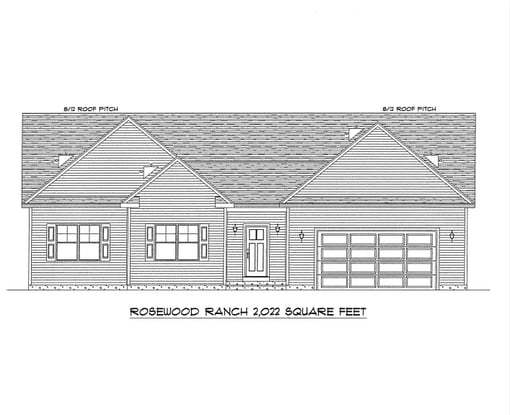
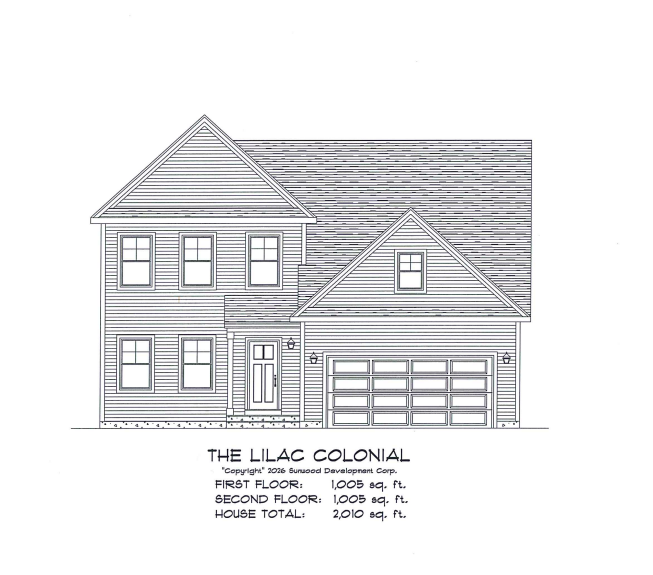
Talia's Trail is an intimate community of just six home sites on a quiet road, with city water, sewer, and natural gas at every lot. It currently offers four floor plans, each with the main living areas on the first floor:
-
The Belton Colonial is 2,244 square feet, with 4 bedrooms and 2.5 bathrooms, and features a well-balanced layout that works for both everyday living and entertaining.
-
The Carlyle Colonial is 2,513 square feet with 4 bedrooms and 2.5 bathrooms, giving you extra space and flexibility if you want a more expansive footprint. If you're considering one of our Colonial floor plans, understanding the history, defining characteristics, and advantages of Colonial architecture can help you decide whether it's the right fit for your lifestyle.
-
The Rosewood Ranch is 2,022 square feet with 3 bedrooms, 2 bathrooms, and all main living spaces on one floor. For buyers thinking about aging-friendly layouts, this is a good floor plan because the primary suite, secondary bedrooms, laundry, kitchen, and dining room are all on the main level.
-
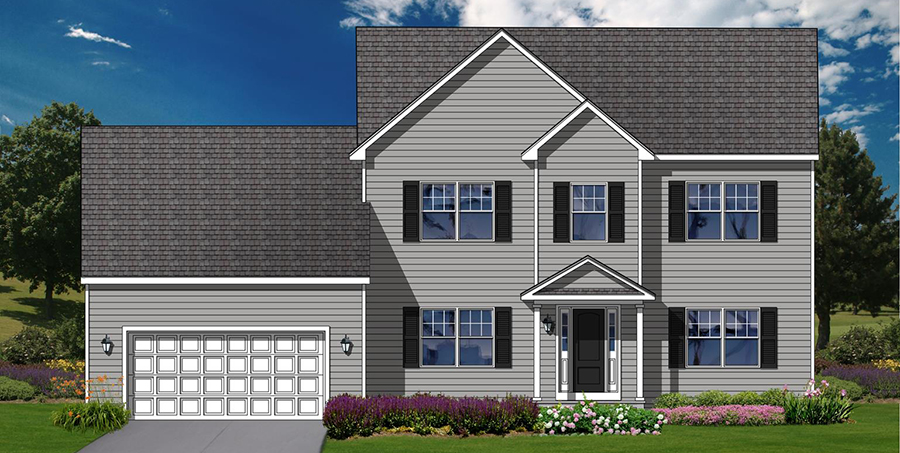
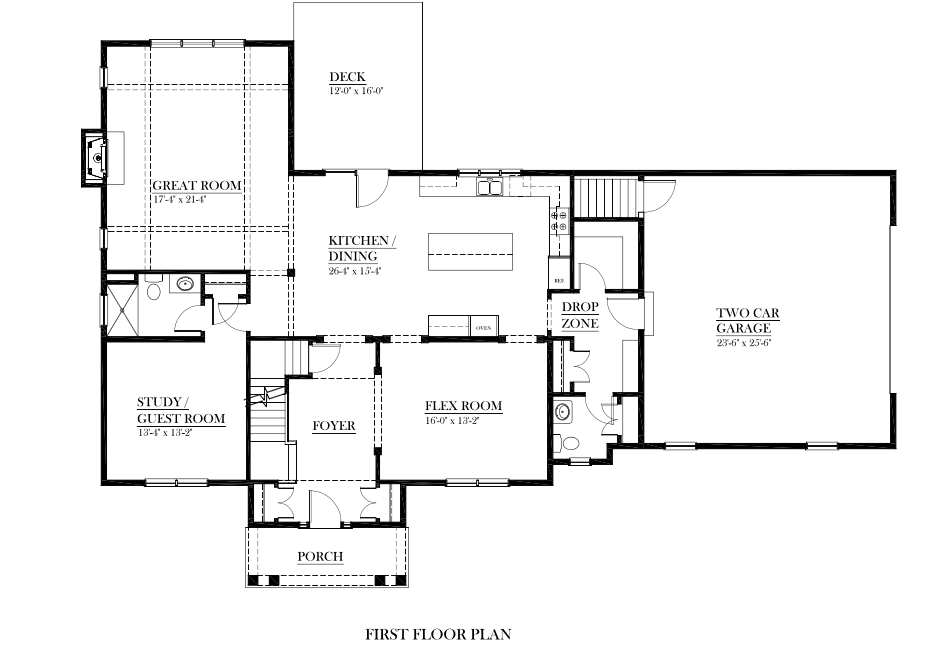
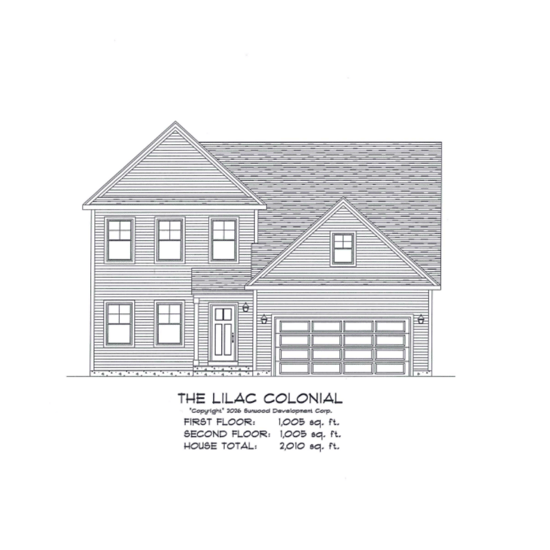
The Lilac Colonial is 2,010 square feet with 3 bedrooms and 2.5 bathrooms. It offers a more efficient colonial footprint, with the kitchen, dining area, living space, half bath, and garage access on the first floor, and all three bedrooms plus laundry upstairs.
With prices starting at $675,000, the build for each of these homes leaves room for the universal design touches covered later in this guide. With the two-story homes, we can design the first-floor flex room or study as a main-level primary suite, size and reinforce the half bath so it converts to a full accessible bath later, and set up a step-free entry from the garage. That frees the upstairs bedrooms for visiting grandchildren or a live-in caregiver.
Kyle Court in Wallingford
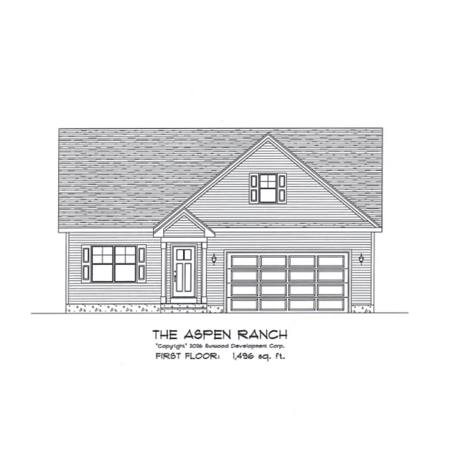
Kyle Court is a new community of 13 home sites on the east side of Wallingford, with lots ranging from 0.12 to 0.67 acres and access to city water and sewer. Here are the available floor plans:
-
The Aspen Ranch is 1,496 square feet with 2 bedrooms and 2 bathrooms, all on one level. The plan includes a first-floor primary suite, second bedroom, great room, kitchen, dining area, laundry room, rear deck, and two-car garage.
-
The Lilac Colonial offers a traditional two-story layout with 3 bedrooms and 2.5 bathrooms. The first floor includes a flex room, kitchen, dining area, great room, half bath, storage, deck, and two-car garage, while the bedrooms and laundry are upstairs.
-
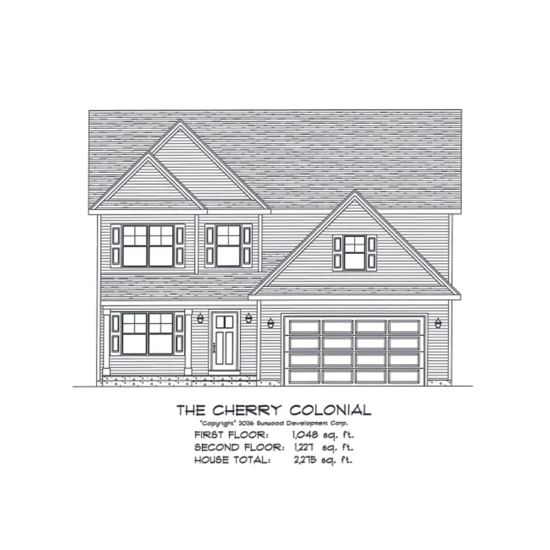
The Cherry Colonial is 2,275 square feet with 4 bedrooms and 2.5 bathrooms. The first floor includes a flex room, great room, dining area, kitchen, pantry, half bath, covered porch, rear deck, storage, and a two-car garage, with all four bedrooms and the laundry room on the second floor.
-
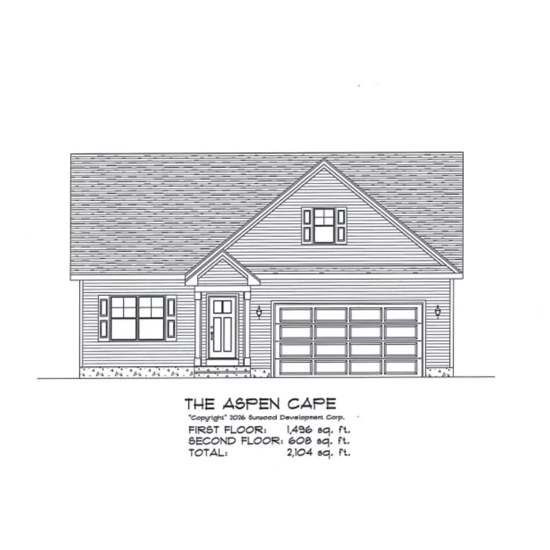
The Aspen Cape is 2,104 square feet with 3 bedrooms and 2.5 bathrooms. It gives you a first-floor bedroom suite, flex room, laundry room, great room, kitchen, dining area, rear deck or optional sunroom, and two-car garage, plus two additional bedrooms and a full bath upstairs.
You can also explore more layouts in our collection of new-home floor plans, and for a closer look at how we tailor a single design to a homeowner's lifestyle, see our breakdown of the Anderson floor plan.
A Room-by-Room Accessibility Checklist
A great single-story plan is the foundation, but the details are where a home truly becomes age-friendly. Here's where to focus, room by room.
Entrances and Hallways
- No-step (zero-threshold) entry. At least one entrance with no steps and a threshold under half an inch, ideal for walkers, wheelchairs, and strollers alike.
- 36-inch-wide doorways and wide hallways that comfortably accommodate mobility devices now or later.
- Lever-style door handles instead of round knobs, which are far easier on arthritic hands.
- Rocker light switches and outlets raised to about 22 inches off the floor for easier reach.
Bathrooms
Bathrooms get the most attention in aging-in-place planning, and for good reason. Prioritize:
- Curbless (zero-threshold) showers with a built-in bench and a handheld showerhead.
- Grab bars, or at minimum, reinforced walls (blocking) so bars can be added later without tearing into the structure.
- Comfort-height toilets and slip-resistant flooring.
Kitchens
- Varied counter heights and a seated prep area so tasks can be done standing or sitting.
- Drawers and pull-out shelves in base cabinets rather than deep lower cupboards that require kneeling.
- Lever or touch faucets and easy-to-reach storage that avoids high upper cabinets.
Throughout the Home
- Smooth, slip-resistant flooring like hardwood, cork, or luxury vinyl, with minimal thresholds between rooms.
- Abundant, layered lighting, especially in hallways, stairwells, and entries.
- Smart-home technology, such as voice assistants, smart thermostats, and video doorbells, which adds convenience and safety with very little effort.
Why a CAPS-Certified Builder Matters
Here's something many homeowners don't know: there's a professional credential specifically for this work. The Certified Aging-in-Place Specialist (CAPS) designation was created by the National Association of Home Builders (NAHB) in collaboration with AARP. It trains builders to design and construct barrier-free, future-ready homes using universal design principles.
A CAPS builder anticipates needs you may not have thought about yet and knows how to integrate accessibility seamlessly without sacrificing energy efficiency, durability, or style. A zero-threshold shower, for example, demands careful moisture management and drainage that a less-experienced builder can easily get wrong.
Sunwood holds the CAPS designation, so aging-in-place and universal design are built into our process from the beginning, and we can guide you to make aging-friendly home choices at each step.
What About Cost?
Many features are affordable when included during a build. A lever door handles run about $25 to $80 each and grab bars roughly $100 to $400 installed, according to NerdWallet. You see even more savings if you include larger structures in the layout. To illustrate, a curbless shower generally costs $6,000 to $12,000, and widening a doorway to a wheelchair-friendly 36 inches runs $800 to $2,500.
ElderLife Financial puts a typical whole-home project in the $3,000 to $15,000 range, with a full accessibility renovation reaching $50,000 or more. Nearly every one of those figures climbs once a home is finished, though: adding blocking behind a closed wall can cost $500 to $1,500 per grab bar, and a doorway you could have framed wide during construction runs $1,500 to $3,000 to widen later.
Set those numbers against the alternative. Genworth's Cost of Care Survey puts the national median for assisted living near $70,800 a year and a private nursing-home room around $127,750 a year. Against figures like those, building your forever home correctly the first time looks less like an expense and more like one of the smartest long-term investments you can make.
Frequently Asked Questions
What is the ideal floor plan for aging in place? A single-story layout with an open concept that minimizes hallways, a no-step entry, wide doorways, and the primary bedroom, full bath, kitchen, and laundry all on the main level. Universal design touches like a curbless shower, lever handles, and slip-resistant flooring make it comfortable at any age.
Is it cheaper to build for aging in place or remodel later? Building it in is almost always cheaper. Features that cost little during construction get expensive once walls and plumbing are finished. Adding blocking behind a closed wall runs $500 to $1,500 per grab bar, and widening a doorway after the fact $1,500 to $3,000.
How much does it cost to build a home for aging in place? Individual features are modest, from about $25 to $80 for a lever handle to $6,000 to $12,000 for a curbless shower. A whole-home project typically runs $3,000 to $15,000, up to $50,000 or more for a full renovation. That compares favorably to long-term care, where the national median for assisted living is near $70,800 a year. See the cost section above for sources.
What's the difference between aging in place and universal design? Aging in place addresses one homeowner's changing needs over time. Universal design makes a space usable by people of all ages and abilities from the outset, integrated so seamlessly it's barely noticeable. The best homes combine both.
At what age should I start planning to age in place? The earlier the better. Building or buying your forever home is the ideal moment, since choices made then serve you for decades and cost far less than retrofitting later.
Do you build aging-in-place homes in Connecticut? Yes. Sunwood Development builds single-story and universally designed homes throughout central Connecticut, including our communities in Middletown and Wallingford, with CAPS-certified expertise.
Build Your Forever Home With Sunwood
The best aging-in-place homes pair a smart layout with universal design throughout and targeted features in the kitchen, bathrooms, and entries, all chosen to fit your life now and for decades to come. And there's nothing like walking through a home to feel how that works in practice, so explore our active communities at Talia's Trail in Middletown and Kyle Court in Wallingford.
For more budgeting and planning resources, download our free homeowners' guide to remodeling and building in Connecticut.
Contact Us
When you're ready to design a home you'll love for a lifetime, reach out to our team to get started