A considerable number of the homes we build in the Wallingford area are what would be considered Colonial-style homes. But just what does a Colonial-style floor plan look like? Is all American colonial architecture pretty much the same? And how might that impact you when choosing the right floor plan for your new Connecticut home? Let’s take a look at some of the similarities and differences that may influence your choice of floor plans.
A little history first
Colonial architecture in America grew out of the building traditions that European settlers brought with them in the 17th and 18th centuries. In New England, the earliest Colonials were built for pure practicality. They were sturdy enough to survive harsh winters and simple enough to build with the materials at hand. As communities grew and prospered, those simple homes evolved into something more refined. By the Georgian era (roughly 1720–1780), the Colonial style had developed the formal symmetry and decorative details that most people picture today.
That history shows up everywhere you look in Connecticut. It's one of the reasons Colonial-style homes feel so naturally at home here. They're as much a part of the region as lobster rolls and thin-crust pizza.
Similarities: The General Layout
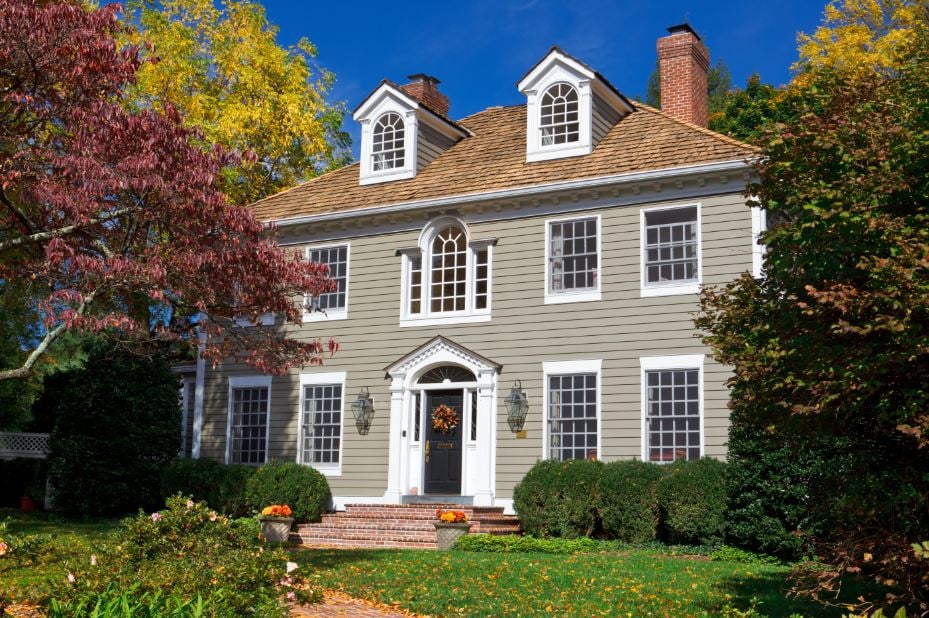
Colonial homes are generally square or rectangular in shape, with the front door placed in the middle of the house’s front. It’s a very symmetrical look. The homes are almost always two-story structures with four rooms on each level. Frequently, the house will have a chimney on one end. Often, you’ll find examples where there are fireplaces (and their respective chimneys) on opposite ends of the home (there’s that sense of symmetry, again). There are two predominant exterior finishes: Clapboard siding or brickwork.
Because the front door is so strategically located exactly in the center of the home, it naturally draws the eye. As a result, many of the Colonial homes you’ll see have some kind of decoration attached to the door. The rooflines are fairly steeply pitched and often feature dormers extending from the roof. Another common feature of many (though not all) Colonial-style homes is that there is a porch of some kind. Columns in the front of the home near the door are another common feature—though they aren't always present.
Inside a Colonial: what the floor plan actually looks like
The interior of a traditional Colonial is just as organized as the outside suggests. Most follow what's called a center-hall layout: a hallway runs straight through from the front door to the back of the home, with rooms branching off on each side. On the main level, you'll typically find a formal living room and dining room. Upstairs, the bedrooms mirror that same balanced arrangement.
Each room is its own enclosed space, which was very much by design. Colonials were built before open-concept living was fashionable, and that defined separation between rooms still appeals to a lot of buyers today. That said, if you're drawn to the Colonial look but prefer a more open feel inside, that's not a problem. We routinely remodel Colonial-style floor plans to open up the main level while keeping everything that makes the exterior so appealing.
Differences: Individual Styles
While there are numerous similarities across Colonial homes, there are also distinct differences in style. Three of the most popular styles are Saltbox, Georgian, and French Colonial. Let’s take a look at each of the three styles.
Saltbox Style
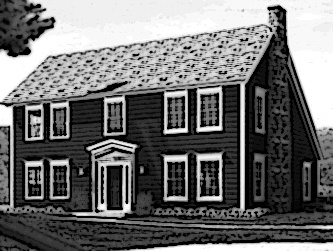
This traditional-style home is a subset of the original Colonial. Its main characteristic is an asymmetrical, long roofline that runs along the rear of the house. The original design was intended to be simple and functional. This style became very popular in New England and is generally associated with the area. If you have a Colonial in Connecticut, chances are strong that it could be a saltbox-style one.
Georgian Style
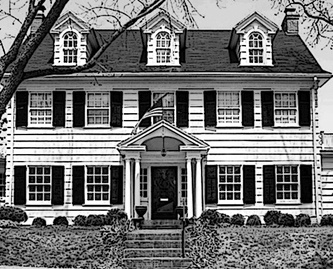
The Georgian style is characterized by a very square and symmetrical shape, with five windows across the front of the house and a pair of chimneys on each end of the house. They typically have a minimum amount of roof overhang and dentil molding lining the eaves of the home. They were a favorite of the New England colonists, and they remain popular to this day.
The French Colonial style
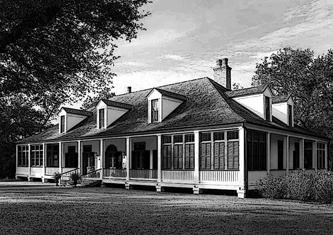
This style is a bit of a departure and features a hipped roof, eyebrow-style dormers, and shutters that frame every window, including the front door. It’s usually symmetrical and often square. Parlors are predominant rooms in these homes because this style of home was built for families who liked to entertain. Wood is the most popular exterior material used for this style. Inside, you will frequently find exposed wooden beams. This particular style of Colonial home is one you are more likely to find in the Southern United States.
Is a Colonial-style home right for you?
Colonial homes tend to be a natural fit for buyers who love classic New England character and want a home that holds its appeal over time. They're also one of the most consistently strong performers in the Connecticut resale market. Keep in mind, the style has been popular here for 300 years, and that's not changing anytime soon.
That said, they're not for everyone. If single-story living is important to you, a Colonial probably isn't your answer. If you need a very open main level, it's worth having a conversation with your builder upfront about how much of the traditional interior layout you want to preserve versus adapt. However, there's a lot of flexibility within the Colonial style, so you have plenty of room to customize your home.
Ready to find your floor plan?
Traditional on the outside doesn't mean limited on the inside. Sunwood offers more than 20 floor plans, ranging from 3 to 5 bedrooms, in both two-story and ranch-style designs, so there are plenty of options to choose from.
Browse our available floor plans and find a home that suits your style.
Contact Us
Connect with our team today if you have more questions about remodeling or building a custom home.